4 minutes read
Most people still view Bitcoin as a speculative asset; governments are starting to treat it like a strategic one.
In 2025, the United States created a Strategic Bitcoin Reserve. El Salvador kept buying it. Others began exploring exposure through reserves, mining, and regulated products.
None of this is loud.
None of it is accidental.
But it points to something bigger:
Bitcoin is beginning to enter the playbook of sovereign power.
Power, Not Just Money
Reserves are not about returns.
They are about survival.
Countries build them to defend against:
inflation
currency collapse
sanctions
geopolitical pressure
Gold filled that role for centuries because it was scarce, neutral, and outside political control.
Bitcoin now enters that same conversation—for the same reasons:
It is scarce.
It is decentralized.
And it does not ask for permission.
From “Unthinkable” to Strategy
Not long ago, the idea of governments holding Bitcoin sounded unserious.
Now, it is policy.
When the United States chose to retain seized Bitcoin instead of selling it, the signal wasn’t loud—but it was clear.
Bitcoin was no longer just something to regulate.
It was something to keep.
That distinction matters.
Because governments don’t hold assets casually.
They hold them strategically.
The Reserve Toolkit Is Expanding
This is not the end of gold.
This is not the end of the dollar.
It is the beginning of something else.
Gold remains the anchor of trust.
The dollar remains the engine of liquidity.
But Bitcoin introduces a new category…
An asset with no issuer, no border, and no central point of control.
For countries that worry about dependence—on currencies, institutions, or geopolitics—that is a significant concern.
Why This Is Happening Now
Diversification
No country wants to rely entirely on another country’s system.
Bitcoin offers something rare: An asset that is not someone else’s liability.
Even a small allocation changes the equation.Sovereignty
Bitcoin exists outside central banks.
For countries navigating:
dollar dominance
sanctions risk
financial exclusion
…it offers an alternative.
Not perfect.
But independent.
Signaling
When a country touches Bitcoin, it sends a message:
“We see where this is going.”
El Salvador moved first. The result wasn’t universal approval—but it forced a global conversation.
Now the question is no longer whether Bitcoin matters.
It’s who positions early.
Optionality
Governments don’t need certainty to act.
They only need probability.
Bitcoin does not have to replace fiat to justify being held.
It only has to matter enough in the future that not holding it becomes a risk.
The Part Few Are Saying Out Loud
There will only ever be 21 million Bitcoin.
A significant portion is already:
lost
locked
or held long-term
That means new demand does not meet new supply: It competes for what already exists.
Now consider this: What happens if even a small number of countries allocate a fraction of their reserves to Bitcoin? The answer is simple—and uncomfortable.
It becomes a competition.
And historically, when governments compete for a scarce reserve asset, they don’t announce it.
They accumulate quietly.
A Quiet Shift Is Already Underway
There are no global declarations.
No coordinated announcements.
Just:
balance sheets adjusting
policies evolving
positions being taken early
That is how structural change usually begins.
Not with headlines—
But with accumulation.
The Risks (and Why They Don’t Stop the Trend)
Bitcoin is volatile.
That alone makes institutions cautious.
There are real challenges:
custody
regulation
operational control
Which is why no serious country is going “all in.”
But they don’t need to.
A strategic asset does not require full commitment.
It requires early positioning.
Not Bitcoin vs Gold
This is not a replacement story.
It is an expansion
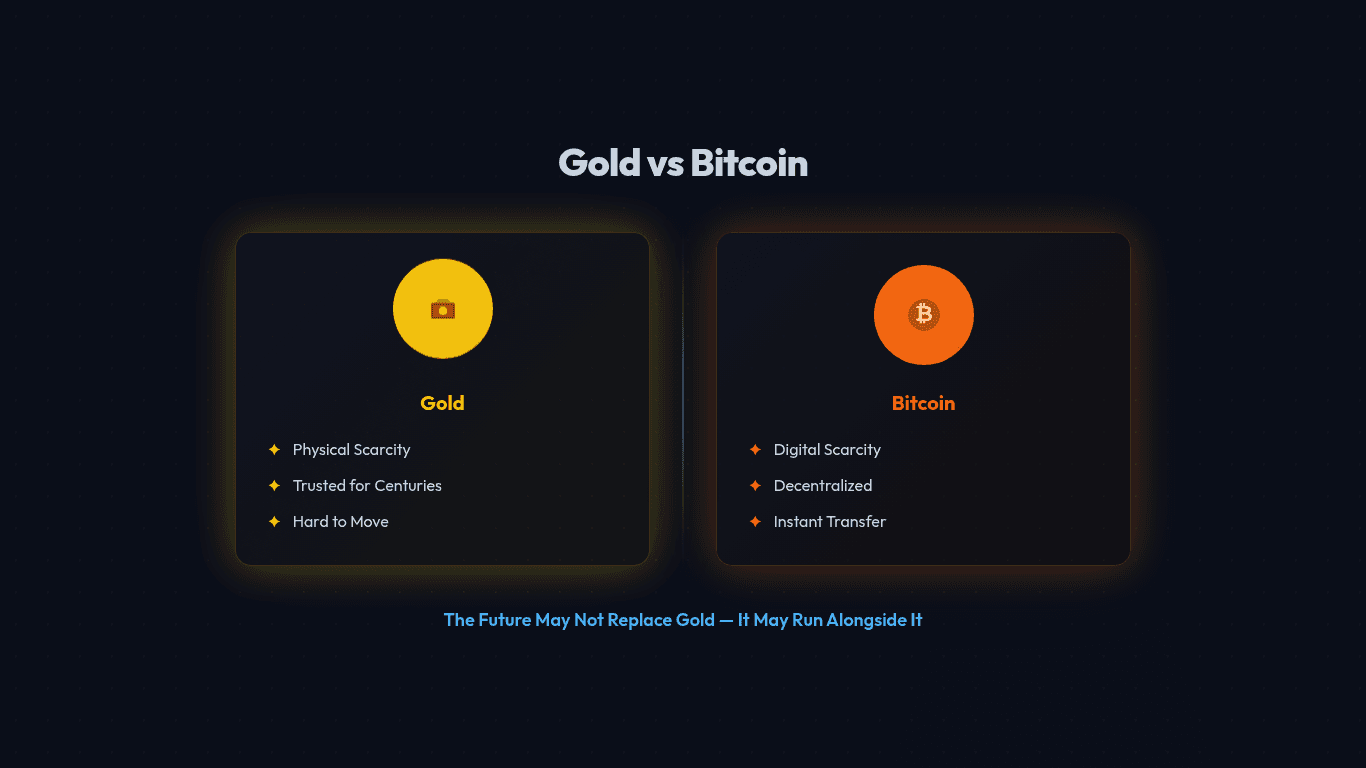
Gold represents physical scarcity
Bitcoin represents digital scarcity
One is proven.
The other is emerging.
Both solve the same problem—differently.
The Layer Most People Miss
When governments change how they treat money, people follow.
Recognition creates trust.
Trust creates usage.
Usage creates infrastructure.
And that infrastructure becomes essential.
Because, in the end, holding Bitcoin is not enough.
People need to:
move it
convert it
spend it
rely on it
That is where platforms like Breedjr become part of the system—not as speculation tools, but as financial bridges between digital assets and everyday economies.
The Bigger Shift
The real story is not that governments believe in Bitcoin.
It is that they are adapting to a world where financial power is changing.
Power is no longer just about:
issuing currency
or holding gold
It is about:
controlling networks
resisting pressure
and remaining flexible in a digital system
In that world, an asset with no issuer and no border becomes difficult to ignore.
Final Thought
Bitcoin is still volatile.
Still debated.
Still easy to dismiss—if you’re not paying attention.
But governments are paying attention.
And when governments begin accumulating an asset quietly, history tends to repeat itself:
They are preparing for something.
The question is no longer whether Bitcoin belongs in the system.
It’s who is positioning early—
and who will be forced to compete for it later.