What Is a Bitcoin Halving and Why Does It Matter?
What Is a Bitcoin Halving and Why Does It Matter?
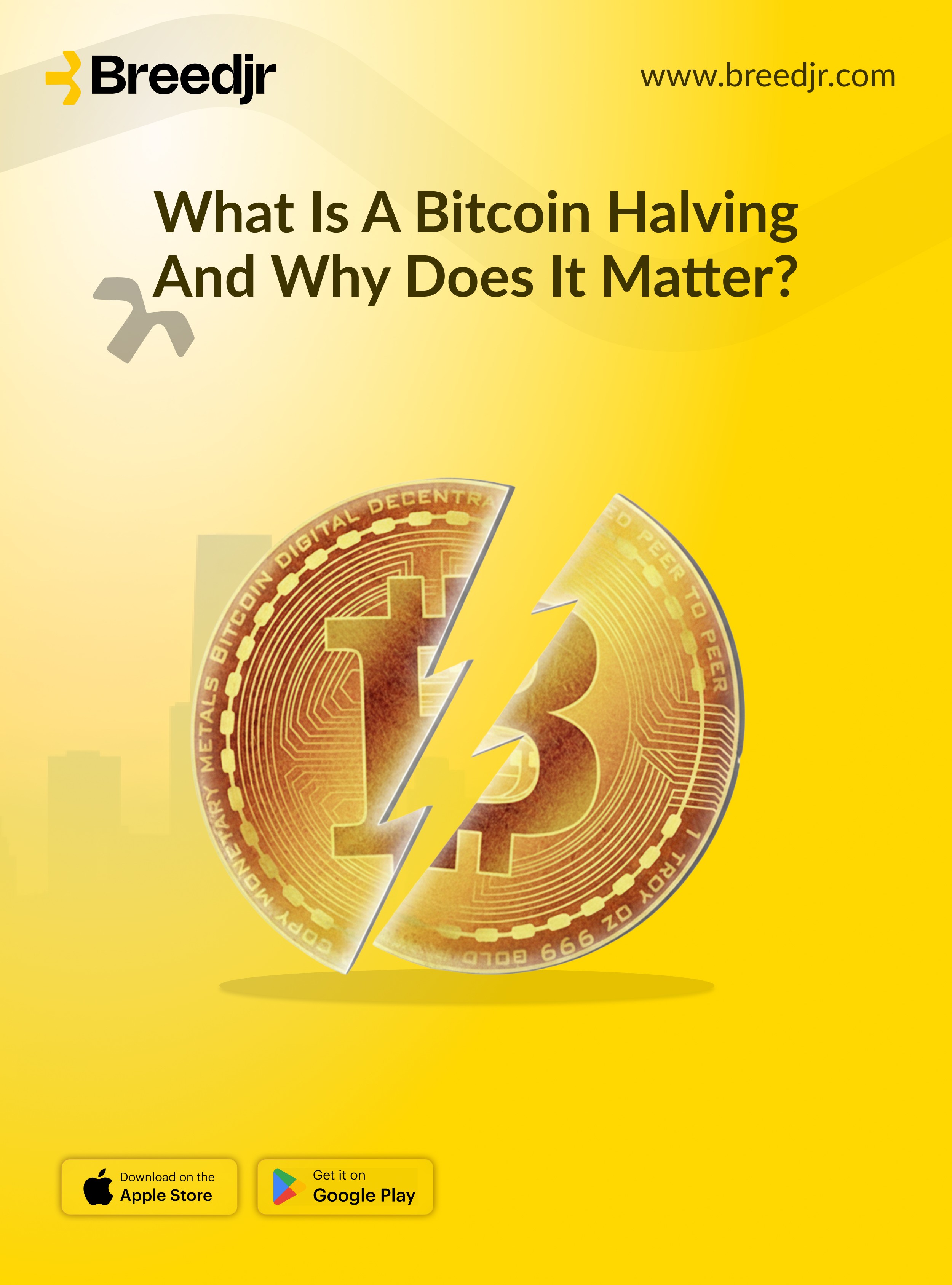
What Is a Bitcoin Halving and Why Does It Matter?
If you've spent any time reading about Bitcoin, you've probably come across the term Bitcoin halving.
Every few years, the crypto community starts talking about it.
News headlines discuss it.
Investors pay attention to it.
Analysts make predictions about it.
But what exactly is a Bitcoin halving?
Why does it happen?
And why do so many people believe it's important?
The good news is that the concept is much simpler than it sounds.
In this beginner-friendly guide, we'll explain Bitcoin halving in plain English and why it matters to Bitcoin users, investors, and the cryptocurrency market.
What Is a Bitcoin Halving?
A Bitcoin halving is an event that reduces the number of new Bitcoins created by the network.
In simple terms:
The reward given to Bitcoin miners is cut in half.
That's why it's called a "halving."
The word literally means that something is reduced by 50%.
What Is Bitcoin Mining?
Before we can understand halving, we first need to understand mining.
Bitcoin transactions are recorded on a blockchain.
Special computers called miners help verify these transactions and keep the network running.
As a reward for their work, miners receive newly created Bitcoins.
This process is known as Bitcoin mining.
Think of mining as the system that introduces new Bitcoins into circulation.
A Simple Real-Life Example
Imagine a school decides to reward students with tokens for helping maintain the school library.
At first, each student receives 10 tokens for their work.
After a few years, the school changes the rule and gives only 5 tokens.
A few years later, the reward drops to 2.5 tokens.
Then later to 1.25 tokens.
The reward keeps getting smaller over time.
Bitcoin works in a similar way.
The reward miners receive is periodically reduced.
Why Does Bitcoin Have Halvings?
The creator of Bitcoin designed the system to have a limited supply.
As we discussed in our article on Bitcoin's value, only 21 million Bitcoins will ever exist.
Bitcoin halvings help control how quickly new Bitcoins enter circulation.
Without halvings, new Bitcoins would be created much faster.
The halving process helps preserve scarcity.
How Often Does a Bitcoin Halving Occur?
A Bitcoin halving occurs approximately every four years.
More specifically, it happens after every 210,000 blocks are added to the blockchain.
Because blocks are added regularly, the event occurs roughly every four years.
What Happens During a Halving?
The reward paid to miners is reduced by half.
For example:
The original reward was 50 BTC per block.
It later dropped to 25 BTC.
Then to 12.5 BTC.
Then to 6.25 BTC.
It is now even lower following subsequent halvings.
The pattern continues until all 21 million Bitcoins have been created.
Why Does Scarcity Matter?
Scarcity is one of the main reasons many people believe Bitcoin has value.
Consider gold.
Gold is valuable partly because it is difficult to find and limited in supply.
If gold suddenly became unlimited, its value would likely decrease.
Bitcoin's supply is also limited.
As the rate of new Bitcoin creation slows, scarcity increases.
Many investors view this as an important feature.
A Supply and Demand Example
Imagine there are only ten tickets available for a major football final.
If thousands of fans want those tickets, demand is high while supply is limited.
This can increase the tickets' value.
Bitcoin follows a similar principle.
If demand remains strong while the supply of new Bitcoin grows more slowly, scarcity may increase.
This is one reason people pay close attention to halvings.
Does Bitcoin's Price Always Increase After a Halving?
Not necessarily.
This is one of the biggest misconceptions about Bitcoin halvings.
Some people assume that every halving automatically causes Bitcoin's price to rise.
The reality is more complicated.
Bitcoin's price depends on many factors, including:
Supply and demand
Market sentiment
Global economic conditions
Regulations
Investor behavior
Adoption rates
A halving can influence supply, but it does not guarantee future price movements.
Why Do Investors Watch Halvings So Closely?
Investors pay attention because halvings affect the rate at which new Bitcoins enter the market.
When fewer new Bitcoins are created, the available supply grows more slowly.
Many investors believe this could influence long-term market dynamics.
As a result, halvings often attract significant media attention and discussion within the crypto community.
How Does a Halving Affect Miners?
Miners earn fewer newly created Bitcoins after each halving.
This means mining becomes more challenging from a profitability perspective.
Miners must operate efficiently to remain competitive.
However, mining continues to play a crucial role in securing the Bitcoin network.
Will Bitcoin Halvings Continue Forever?
No.
Bitcoin has a maximum supply of 21 million coins.
Eventually, all Bitcoins will be mined.
When that happens, miners will no longer receive newly created Bitcoin rewards.
Instead, they are expected to earn transaction fees paid by users of the network.
This process will take many decades to complete.
Why Does Bitcoin Halving Matter to Ordinary Users?
You don't need to be a miner or investor to understand why halving matters.
Halving helps explain one of Bitcoin's most important characteristics:
Its supply is predictable and limited.
Unlike traditional currencies, which can sometimes be increased by central authorities, Bitcoin follows a transparent schedule that anyone can verify.
This predictability is one reason many people find Bitcoin attractive.
How Does Bitcoin Halving Relate to Crypto-to-Cash Services?
Many people buy, hold, receive, and eventually convert Bitcoin into local currency.
Events such as Bitcoin halvings often generate increased interest in Bitcoin and cryptocurrency generally.
As interest grows, more people may:
Buy Bitcoin
Receive Bitcoin as payment
Hold Bitcoin as an investment
Convert Bitcoin into Naira or other local currencies
Understanding halving helps users better understand the factors that influence Bitcoin's popularity and market activity.
Common Misconceptions About Bitcoin Halving
Myth 1: Halving Means Half of Your Bitcoin Disappears
No.
A halving affects miner rewards, not the Bitcoin already owned by users.
Myth 2: Halving Automatically Doubles Bitcoin's Price
No.
Prices are influenced by many factors, not just halvings.
Myth 3: Bitcoin Halving Is a Problem
Actually, halvings are part of Bitcoin's original design.
They help maintain the scarcity that many people value.
The Simplest Way to Remember It
If you forget everything else, remember this:
A Bitcoin halving reduces the number of new Bitcoins created by the network.
Or even simpler:
Every few years, Bitcoin becomes harder to create.
This helps preserve its limited supply.
Final Thoughts
Bitcoin halving is one of the most unique features of the Bitcoin network.
By gradually reducing the creation of new Bitcoins, halvings help maintain scarcity and support Bitcoin's fixed supply model.
While halvings do not guarantee future price increases, they remain important events because they affect how new Bitcoins enter circulation.
Whether you're a beginner, an investor, or simply curious about cryptocurrency, understanding Bitcoin halving is an important step toward understanding how Bitcoin works.
And once you understand halving, you'll better understand why scarcity plays such a major role in Bitcoin's value and popularity.
What Is a Bitcoin Halving and Why Does It Matter?
If you've spent any time reading about Bitcoin, you've probably come across the term Bitcoin halving.
Every few years, the crypto community starts talking about it.
News headlines discuss it.
Investors pay attention to it.
Analysts make predictions about it.
But what exactly is a Bitcoin halving?
Why does it happen?
And why do so many people believe it's important?
The good news is that the concept is much simpler than it sounds.
In this beginner-friendly guide, we'll explain Bitcoin halving in plain English and why it matters to Bitcoin users, investors, and the cryptocurrency market.
What Is a Bitcoin Halving?
A Bitcoin halving is an event that reduces the number of new Bitcoins created by the network.
In simple terms:
The reward given to Bitcoin miners is cut in half.
That's why it's called a "halving."
The word literally means that something is reduced by 50%.
What Is Bitcoin Mining?
Before we can understand halving, we first need to understand mining.
Bitcoin transactions are recorded on a blockchain.
Special computers called miners help verify these transactions and keep the network running.
As a reward for their work, miners receive newly created Bitcoins.
This process is known as Bitcoin mining.
Think of mining as the system that introduces new Bitcoins into circulation.
A Simple Real-Life Example
Imagine a school decides to reward students with tokens for helping maintain the school library.
At first, each student receives 10 tokens for their work.
After a few years, the school changes the rule and gives only 5 tokens.
A few years later, the reward drops to 2.5 tokens.
Then later to 1.25 tokens.
The reward keeps getting smaller over time.
Bitcoin works in a similar way.
The reward miners receive is periodically reduced.
Why Does Bitcoin Have Halvings?
The creator of Bitcoin designed the system to have a limited supply.
As we discussed in our article on Bitcoin's value, only 21 million Bitcoins will ever exist.
Bitcoin halvings help control how quickly new Bitcoins enter circulation.
Without halvings, new Bitcoins would be created much faster.
The halving process helps preserve scarcity.
How Often Does a Bitcoin Halving Occur?
A Bitcoin halving occurs approximately every four years.
More specifically, it happens after every 210,000 blocks are added to the blockchain.
Because blocks are added regularly, the event occurs roughly every four years.
What Happens During a Halving?
The reward paid to miners is reduced by half.
For example:
The original reward was 50 BTC per block.
It later dropped to 25 BTC.
Then to 12.5 BTC.
Then to 6.25 BTC.
It is now even lower following subsequent halvings.
The pattern continues until all 21 million Bitcoins have been created.
Why Does Scarcity Matter?
Scarcity is one of the main reasons many people believe Bitcoin has value.
Consider gold.
Gold is valuable partly because it is difficult to find and limited in supply.
If gold suddenly became unlimited, its value would likely decrease.
Bitcoin's supply is also limited.
As the rate of new Bitcoin creation slows, scarcity increases.
Many investors view this as an important feature.
A Supply and Demand Example
Imagine there are only ten tickets available for a major football final.
If thousands of fans want those tickets, demand is high while supply is limited.
This can increase the tickets' value.
Bitcoin follows a similar principle.
If demand remains strong while the supply of new Bitcoin grows more slowly, scarcity may increase.
This is one reason people pay close attention to halvings.
Does Bitcoin's Price Always Increase After a Halving?
Not necessarily.
This is one of the biggest misconceptions about Bitcoin halvings.
Some people assume that every halving automatically causes Bitcoin's price to rise.
The reality is more complicated.
Bitcoin's price depends on many factors, including:
Supply and demand
Market sentiment
Global economic conditions
Regulations
Investor behavior
Adoption rates
A halving can influence supply, but it does not guarantee future price movements.
Why Do Investors Watch Halvings So Closely?
Investors pay attention because halvings affect the rate at which new Bitcoins enter the market.
When fewer new Bitcoins are created, the available supply grows more slowly.
Many investors believe this could influence long-term market dynamics.
As a result, halvings often attract significant media attention and discussion within the crypto community.
How Does a Halving Affect Miners?
Miners earn fewer newly created Bitcoins after each halving.
This means mining becomes more challenging from a profitability perspective.
Miners must operate efficiently to remain competitive.
However, mining continues to play a crucial role in securing the Bitcoin network.
Will Bitcoin Halvings Continue Forever?
No.
Bitcoin has a maximum supply of 21 million coins.
Eventually, all Bitcoins will be mined.
When that happens, miners will no longer receive newly created Bitcoin rewards.
Instead, they are expected to earn transaction fees paid by users of the network.
This process will take many decades to complete.
Why Does Bitcoin Halving Matter to Ordinary Users?
You don't need to be a miner or investor to understand why halving matters.
Halving helps explain one of Bitcoin's most important characteristics:
Its supply is predictable and limited.
Unlike traditional currencies, which can sometimes be increased by central authorities, Bitcoin follows a transparent schedule that anyone can verify.
This predictability is one reason many people find Bitcoin attractive.
How Does Bitcoin Halving Relate to Crypto-to-Cash Services?
Many people buy, hold, receive, and eventually convert Bitcoin into local currency.
Events such as Bitcoin halvings often generate increased interest in Bitcoin and cryptocurrency generally.
As interest grows, more people may:
Buy Bitcoin
Receive Bitcoin as payment
Hold Bitcoin as an investment
Convert Bitcoin into Naira or other local currencies
Understanding halving helps users better understand the factors that influence Bitcoin's popularity and market activity.
Common Misconceptions About Bitcoin Halving
Myth 1: Halving Means Half of Your Bitcoin Disappears
No.
A halving affects miner rewards, not the Bitcoin already owned by users.
Myth 2: Halving Automatically Doubles Bitcoin's Price
No.
Prices are influenced by many factors, not just halvings.
Myth 3: Bitcoin Halving Is a Problem
Actually, halvings are part of Bitcoin's original design.
They help maintain the scarcity that many people value.
The Simplest Way to Remember It
If you forget everything else, remember this:
A Bitcoin halving reduces the number of new Bitcoins created by the network.
Or even simpler:
Every few years, Bitcoin becomes harder to create.
This helps preserve its limited supply.
Final Thoughts
Bitcoin halving is one of the most unique features of the Bitcoin network.
By gradually reducing the creation of new Bitcoins, halvings help maintain scarcity and support Bitcoin's fixed supply model.
While halvings do not guarantee future price increases, they remain important events because they affect how new Bitcoins enter circulation.
Whether you're a beginner, an investor, or simply curious about cryptocurrency, understanding Bitcoin halving is an important step toward understanding how Bitcoin works.
And once you understand halving, you'll better understand why scarcity plays such a major role in Bitcoin's value and popularity.

Breedjr is a financial technology company, not a bank. Banking services provided by partner banks, members FDIC.
Breedjr is a financial technology company, not a bank. Banking services provided by partner banks, members FDIC.
Breedjr is a financial technology company, not a bank. Banking services provided by partner banks, members FDIC.
© 2026 Breedjr
© 2026 Breedjr